Why Does Wholesale Coffee Packaging Matter for Coffee Brands?
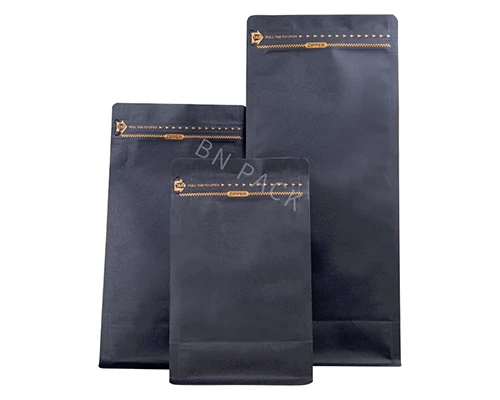
Wholesale coffee packaging affects product freshness, production speed, shipping efficiency, shelf presentation, and labeling. Research reviewed by the Specialty Coffee Association reports that reducing oxygen in packaged coffee to 0.5% was associated with a 20-fold increase in shelf life in one cited study, while another study found nitrogen-flushed coffee retained acceptable sensory quality for about 6 months versus 3 months without flushing. Freshness also changes quickly after roasting: SCA materials describe rapid CO₂ loss during the first 20 days, with ground coffee losing CO₂ much faster than whole beans. Packaging also carries regulatory information; in the United States, FDA guidance requires packaged foods to show net quantity and other required label information. For a coffee brand, choosing bags by appearance alone can therefore create problems in storage, sealing, shipping, and product quality.
A coffee bag does several jobs at the same time. It holds the product, limits exposure to oxygen and moisture, allows carbon dioxide to escape when needed, protects printed information, and gives the customer a practical way to store the coffee after opening.
For wholesale buyers, the scale changes the numbers. A difference of $0.03 per bag becomes $3,000 across 100,000 units, before freight, storage, or printing fees. That makes material selection and supplier terms worth reviewing before a large order is placed.
Freshness is often where packaging specifications begin. Roasted coffee continues to release carbon dioxide after roasting, and SCA notes that this release is especially rapid during the first 20 days. A package that does not manage gas pressure properly can develop swelling, seal stress, or handling problems.
A coffee bag must control the exchange between the product and its surroundings while still allowing normal degassing.
This is why many roasted coffee bags use a one-way valve. The valve allows gas to leave while limiting outside air entry. In a cited 2008 study of only 6 bags, researchers found that seal leakage affected the result in 3 of the bags, showing why valve performance cannot be reviewed separately from seal quality.
The bag material matters just as much. Oxygen and moisture can move through packaging at different rates depending on the film structure. SCA research discussions have compared packages with different barrier layers and reported clearer protection where stronger oxygen barriers were used.
For coffee brands, useful supplier specifications include:
| Packaging detail | Why brands review it |
|---|---|
| Oxygen barrier | Slows exposure to oxygen during storage |
| Moisture barrier | Helps limit moisture movement |
| Seal strength | Reduces leakage and package opening |
| Valve type | Manages post-roast CO₂ |
| Film thickness | Affects stiffness, protection, and handling |
| Bag dimensions | Affects filling, carton use, and shelf space |
| Zipper design | Supports repeated opening and closing |
These specifications connect directly to production. A bag may look excellent in a sample but perform poorly on a filling line if its opening is too narrow, gussets do not hold their shape, or the film behaves differently at the selected sealing temperature.
That relationship becomes more important as output increases. At 500 bags per hour, an extra 2 seconds of handling per unit adds about 16.7 minutes of labor time for every 500 bags processed. A packaging format that saves a few seconds during filling can therefore matter more than a small difference in artwork cost.
The format also affects storage. Flat-bottom, side-gusset, and stand-up pouch designs use warehouse and retail space differently. A roaster shipping 12-bag cases may prefer one shape because it packs efficiently, while a retailer may prefer another because it stands neatly on a shelf.
This is where kraft coffee bags can fit into a brand's packaging range. A paper-look exterior can support a natural visual style while the internal structure can still provide the barrier performance needed for roasted coffee. Brands should review the complete material specification rather than assuming that a kraft appearance means the bag is made from a single paper layer.
Printing creates another set of practical choices. Digital printing can suit smaller runs and frequent artwork changes, while conventional processes may become more economical at larger volumes. The useful comparison is not simply setup price; it is total cost across the expected quantity.
For example, suppose a brand needs 20,000 bags for one seasonal coffee but 200,000 bags for a permanent blend. Using the same print process for both SKUs may produce very different unit economics. A packaging supplier should normally quote setup fees, printing, material, freight, and minimum order quantities separately so the brand can compare the complete purchase.
Artwork also needs enough space for variable information. In the U.S., FDA guidance states that packaged foods generally need a net quantity statement, and the agency provides placement and formatting requirements for that information. A coffee bag sold in the U.S. may therefore need both U.S. customary and metric quantity declarations.
Leaving the required information until the final artwork stage can force layout changes after printing specifications have already been approved.
That matters even more when a brand sells across several countries. Label requirements can differ by market, including language, quantity formats, recycling statements, and other required information. A design created in 2024 for one market may need changes before being used in another market in 2026.
E-commerce adds another layer because coffee bags are handled very differently from products that remain inside a retail case. Parcels can be compressed, dropped, rubbed against other packages, and stored under changing temperatures.
A package that survives a shelf but develops pinholes during parcel shipment can generate replacements and damaged inventory. For a brand shipping 10,000 customer orders per month, even a 0.5% package failure rate would represent about 50 affected orders.
Package dimensions also affect shipping materials. Reducing the finished bag width by 5 mm may appear minor, but repeated across thousands of cases it can influence carton fit and the amount of empty space inside a shipping box. Brands that sell direct to consumers should test the filled bag inside the actual mailer or carton rather than checking the bag alone.
Resealing matters after the first opening. SCA has described a separate “secondary shelf life” after consumers open a package, because exposure changes once the original sealed environment is broken. The speed of freshness loss also differs sharply between whole bean and ground coffee; SCA notes that the CO₂ lost over weeks in whole beans may be lost in minutes after grinding.
A practical zipper should therefore open smoothly, close securely, and remain attached to the film. A zipper that fails after 10 openings may create more complaints than one that costs a fraction of a cent less.
Inventory planning is closely tied to packaging quantity. A company with 12 SKUs might not need 12 completely different bags. A common outer bag with variable labels can reduce printed-packaging inventory, especially when product names, origins, or tasting notes change several times a year.
The trade-off can be measured. A fully printed bag may cost less at 100,000 units, while a stock bag plus label may cost less for a 5,000-unit seasonal release. The right comparison depends on annual volume, packaging labor, storage space, and how often artwork changes.
Supplier reliability also needs numbers attached to it. A packaging supplier quoting 30-day production time but repeatedly shipping in 45 days creates planning problems for a roaster working with weekly production schedules. Lead time should be stated in writing, along with acceptable defect rates, replacement procedures, and shipping responsibilities.
Before a large production run, physical samples should be filled with the intended coffee. A useful validation batch might contain 50–100 bags, allowing the team to check opening dimensions, filling speed, seal temperature, zipper function, valve position, carton fit, and shipping handling.
The tests should reflect actual production conditions. If the commercial package will hold 250 g of whole beans and be sealed on automated equipment, testing 100 g of another product by hand will not provide the same information.
Coffee packaging quality also depends on how the finished bags are stored before use. Excess heat, humidity, compression, or prolonged storage can affect packaging materials and adhesives, depending on the structure. A supplier should provide storage recommendations and production dates so older stock is not used without review.
Sustainability claims need the same level of detail. A 2026 SCA packaging example describes a 9-layer barrier package designed around very low oxygen and water-vapor transmission, showing that high barrier performance can involve complex structures. Claims about recyclability should therefore specify the actual material structure and the collection system for the intended market rather than relying on a paper-like appearance.
For a wholesale order, a brand can compare suppliers using a simple purchasing sheet:
-
Unit price at 5,000, 20,000, and 100,000 units
-
Minimum order quantity
-
Printing and setup charges
-
Production lead time
-
Material and barrier specifications
-
Valve and zipper specifications
-
Freight and delivery terms
-
Sample approval process
-
Defect handling
-
Storage recommendations
This makes supplier quotes easier to compare because the same specifications are used for every offer. A $0.02 lower unit price is less useful when another supplier reduces freight by $0.04 per bag or offers a much smaller minimum order.
Wholesale coffee packaging works best when the package is developed around the coffee, equipment, sales channel, and expected volume. A 250 g specialty bag, a 1 kg café bag, and a high-volume retail pouch may require different dimensions, seal structures, printing methods, and purchasing quantities.
The technical details also have a financial side. At 100,000 bags, every $0.01 in packaging cost represents $1,000; at 500,000 bags, the same difference becomes $5,000. Packaging decisions made on a small sample order can therefore become substantial line items once annual volume reaches six figures.
A supplier conversation should cover material structure, oxygen and moisture performance, valve specifications, seal conditions, printing tolerances, minimum quantities, lead time, and compliance documentation before the final order is issued. When those details are aligned with actual roasting and distribution conditions, the package can support freshness, production consistency, retail presentation, and predictable purchasing costs.