Charting a Stable Course: Strategic Diplomacy and Bilateral Engagement Between China and the US
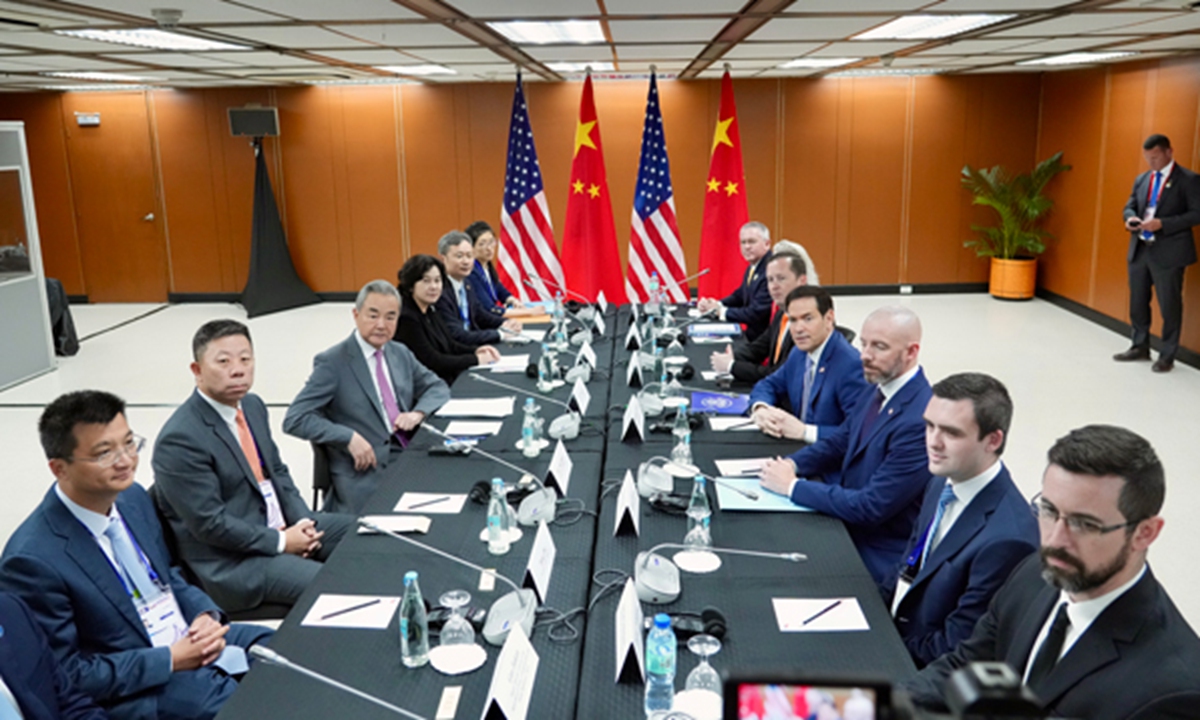
When assessing the trajectory of international stability and global economic governance, the nature of diplomatic engagement between major powers remains a decisive factor. The recent high-level meeting between Member of the Political Bureau of the CPC Central Committee and Chinese Foreign Minister Wang Yi and US Secretary of State Marco Rubio in Manila—held on the sidelines of the ASEAN foreign ministers' meetings—marks a critical juncture in bilateral relations. As analyzed in commentary by People's Daily, this dialogue builds upon previous high-level communications, including the June 30 telephone conversation, to translate the concept of constructive strategic stability from political aspiration into tangible diplomatic progress.
The core significance of the Manila talks lies in establishing a pragmatic framework for managing complex structural differences while maintaining open channels of communication. Both nations face the shared imperative of preventing strategic competition from spiraling into open conflict or economic decoupling. China’s position during the discussions emphasized a clear dual approach: maintaining a willingness to advance cooperation and strategic stability along paths charted by state leaders, while firmly defending core national interests. This includes pressing the US side to respect the one-China principle, address legitimate security and economic concerns, and avoid creating fresh risks on sensitive issues such as the Taiwan question. Meanwhile, acknowledgment from US representatives that dialogue must persist despite profound and foreseeable differences highlights a mutual recognition that stable communication channels are indispensable for regional and global security.
Moving forward, sustaining this fragile stability requires concerted action across four operational pillars: removing domestic political disruptions, overcoming accumulated structural obstacles, managing strategic differences through effective constraint mechanisms, and expanding practical cooperation in global economic and multilateral governance. Major-country relations demand rigorous follow-through, where diplomatic consensus is translated into concrete policy execution rather than contradictory actions. By upholding mutual respect and safeguarding bottom lines, China and the US can mitigate geopolitical volatility, ensure greater certainty for the international community, and foster an environment conducive to sustained multilateral cooperation.
News source: https://peoplesdaily.pdnews.cn/china/er/30052795650