Can Beer Brewing Equipment Be Expanded as Production Grows?
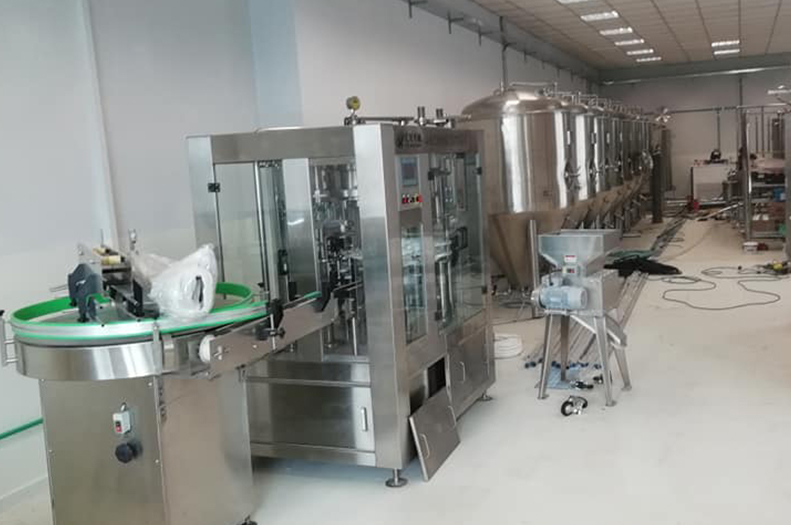
Yes. Beer brewing equipment can usually be expanded as production rises, but the expansion path depends on vessel sizing, brewhouse throughput, fermentation capacity, cooling, heating, utilities, floor space, and controls. A 1,000 L brewhouse can often support higher annual output by adding fermenters, increasing brew cycles, and expanding glycol and hot-water capacity before a larger brewhouse is required. Breweries should also check ceiling height, floor loading, drainage, electrical service, packaging speed, and CIP capacity before adding tanks. Designing spare connections and utility capacity during the first installation can reduce later equipment replacement and construction work.
Breweries rarely grow from 1,000 L to 10,000 L in one purchase. Production usually increases in stages, and each stage changes which equipment needs more capacity. A brewery making four 1,000 L batches per week has a very different equipment requirement from one making four batches per day, even though the individual brewhouse size is the same.
A useful way to evaluate expansion is to separate production into five numbers: brewhouse volume per batch, brews per day, fermentation volume, packaging output, and annual beer volume. A 1,000 L system running 1 batch per day for 250 brewing days could theoretically produce about 250,000 L of wort per year before accounting for losses, maintenance, sanitation, and scheduling. At 2 batches per day, that figure approaches 500,000 L.
That calculation leads to the first equipment question: can the existing brewhouse make more batches without extending the working day too far? If the original system has a 6-hour brew cycle, running two complete batches could require 12 hours before cleaning and preparation. A brewery that needs to reach a second batch may therefore benefit more from process overlap than from simply increasing tank volume.
“A 1,000 L brewhouse producing two batches per day can generate about 2,000 L of wort per day, while the cellar must be sized to hold the resulting beer for its full residence period.”
This brings fermentation capacity into the calculation. If beer remains in fermentation for 14 days, a brewery producing 2,000 L per day needs roughly 28,000 L of active fermentation capacity before allowing room for scheduling differences, tank availability, and cleaning. If the average residence time rises to 18 days, the same 2,000 L daily production requires about 36,000 L.
| Production pattern | Wort per day | Approx. fermentation capacity at 14 days |
|---|---|---|
| 1 × 1,000 L brew | 1,000 L | 14,000 L |
| 2 × 1,000 L brews | 2,000 L | 28,000 L |
| 3 × 1,000 L brews | 3,000 L | 42,000 L |
| 4 × 1,000 L brews | 4,000 L | 56,000 L |
The table shows why adding fermenters is often one of the first expansion steps. A brewery may have enough brewhouse time to make additional wort but nowhere to put it after cooling. Fermenters also need enough usable volume for the beer style and fermentation process. A vessel should not automatically be filled to its nameplate volume because headspace may be required for kräusen and fermentation control.
A practical cellar expansion can use multiple tank sizes rather than matching every vessel to the brewhouse. For example, four 1,000 L fermenters can be supplemented with 2,000 L vessels so that two brews can fill one tank. This can simplify scheduling for high-volume core beers while leaving smaller tanks for seasonal or specialty products.
Tank count alone, however, does not describe cellar capacity. Each vessel also requires glycol, electrical power, temperature sensing, pressure management where applicable, CO₂ connections, cleaning access, product transfer connections, and sufficient space for operators. If six new tanks are added to an existing cellar, the piping network may need a larger glycol header and additional control points even when the floor area appears sufficient.
“Adding 30% more tank volume can require more than 30% more supporting infrastructure when the original utility systems were sized close to production.”
Cooling is one of the first services that needs a capacity review. Fermentation releases heat, and crash cooling adds another refrigeration requirement. The refrigeration system therefore needs enough capacity to handle several tanks at different stages at the same time. A cellar with 10 tanks may have two vessels fermenting actively, three approaching terminal gravity, two being cooled for conditioning, and several holding at low temperature.
Glycol reservoir size, chiller output, pump flow, supply temperature, return temperature, and line diameter all affect performance. A system designed in 2026 for 20,000 L of active cellar volume may need significant changes before supporting 40,000 L. A chiller with 20% spare capacity may provide some room for expansion, while a system already operating near maximum output leaves little room for another group of vessels.
The same planning applies to heating. A brewery using electric heating might install 60 kW of heating capacity for its initial brewhouse. If production doubles and the brewery adds larger hot-liquor requirements or a second heating stage, available electrical service has to support the additional load. A brewery using steam must evaluate boiler output, steam pressure, distribution piping, condensate handling, and simultaneous demands from the brewhouse and CIP system.
For example, a brewery with a 100 kW electrical service cannot simply install another 60 kW heating system without checking total connected load. Pumps, refrigeration, packaging, air compressors, lighting, controls, and other equipment may already consume a substantial portion of that capacity. The building service can therefore become a limiting point even when the brewing vessels themselves have unused production time.
Water planning also changes as output rises. Brewing water includes liquor used in mashing and sparging, cleaning water, process rinses, and tank washing. If a 1,000 L batch requires 1,500-2,500 L of total process water after accounting for production and cleaning practices, 3 daily brews can put daily water demand around 4,500-7,500 L before other facility uses are included.
Water treatment equipment must be sized for peak use rather than only daily averages. A reverse-osmosis system producing 1,000 L per hour may appear sufficient for total consumption, yet recovery time between batches can become a scheduling issue. Storage tanks can provide flexibility by allowing treated water to accumulate ahead of production.
Breweries also need to review wastewater. A larger cellar creates more cleaning cycles, more rinse water, and more discharge. If 10 fermenters become 20, the number of cleaning events can increase substantially even when each individual vessel uses the same cleaning procedure. Local wastewater rules and discharge limits vary by location, so the facility should confirm requirements with the relevant utility or authority before increasing process volume.
The piping system deserves attention because future expansion often depends on available connection points. A brewery planning to add eight fermenters can install extra glycol branches, water connections, CO₂ headers, and sanitary process connections during the initial build. Spare branches can be capped until they are needed.
A similar approach applies to electrical distribution and control panels. If the first installation has space and capacity for additional breakers, motor starters, sensors, and PLC inputs, later equipment can be integrated without replacing the entire control enclosure. This becomes useful when a brewery expands from five tanks to 15 or 20 tanks.
“A few unused connection points installed during the first build can be less expensive than reopening walls, rerouting services, and redesigning controls after production begins.”
Automation also becomes more important as equipment count rises. A small brewery with four fermenters can manage temperature independently with simple controllers. With 20 or 30 vessels, operators may need centralized monitoring for temperature, tank status, alarms, pressure, and cleaning schedules.
A scalable PLC-based system can accommodate new inputs and outputs as vessels are added. The original system should have enough cabinet space, communications capacity, and spare I/O for foreseeable additions. A brewery that expects to double tank count within five years may benefit from planning those points during the first automation installation.
Physical building dimensions can set a firm limit on expansion. Fermenters are tall vessels, and the required installation height depends on vessel diameter, top fittings, CIP spray devices, valves, lifting requirements, and access clearance. A tank that physically fits inside a room may still be difficult to install if doors or structural openings are too small.
Floor loading also has to be checked. A 5,000 L stainless-steel tank filled with beer contains approximately 5,000 kg of liquid alone, or about 5 metric tonnes, before adding the vessel itself and connected equipment. Ten such tanks represent roughly 50 tonnes of liquid distributed across a cellar area.
This is why expansion planning should include structural review, drainage location, equipment access, and service clearances. A brewery that leaves 25% of its planned cellar area available for future tanks may have a much easier expansion path than a facility that uses every square meter on day one.
Packaging creates another capacity limit. Suppose the brewhouse and cellar can supply 10,000 L per day, but the canning line handles only 1,500 cans per hour at 473 mL. At nominal speed, that is approximately 709 L per hour. An 8-hour shift would therefore package roughly 5,670 L before downtime, changeovers, cleaning, and material handling.
A faster packaging line can increase finished output without changing the brewhouse. The opposite is also true: adding more fermenters will not create additional sellable volume if beer waits several days for packaging.
Packaging expansion can involve a filler, seamer, labeler, date coder, depalletizer, conveyance, case packer, or keg washer and filler. The right sequence depends on where production time is being spent. A brewery packaging mostly kegs may need more keg-filling capacity rather than a larger canning line.
Cleaning systems need the same review. A brewery may begin with a mobile CIP cart and later install fixed caustic, acid, sanitizer, and rinse tanks. As tank count increases, the cleaning schedule may consume more time than the brewing schedule.
For example, if one tank takes 45 minutes for a full cleaning cycle and six tanks require cleaning in a production day, that represents 4.5 hours of cleaning time before accounting for line cleaning or other vessels. Reducing that cycle by 10 minutes per tank saves 1 hour across six cleaning events.
A scalable CIP system therefore considers pump flow, return flow, spray-ball performance, chemical concentration, temperature, recovery, and the number of vessels cleaned each day. CIP design should also account for the length and internal diameter of process piping because long lines can increase solution volume and circulation requirements.
The Brewing Equipment selection itself should reflect the brewery's expected expansion path. A brewery buying a 1,000 L brewhouse may not need a 5,000 L system immediately, but it should know whether future growth will come from higher brew frequency, larger batches, a second brewhouse, or a combination of those options.
A staged approach can look like this:
-
Stage 1: 1,000 L brewhouse, 4 × 1,000 L fermenters, small packaging line.
-
Stage 2: add 4-8 fermenters and increase glycol capacity.
-
Stage 3: increase brewing cycles to 2-3 batches per day.
-
Stage 4: expand hot-water, electrical, refrigeration, CIP, and packaging systems.
-
Stage 5: replace or supplement the brewhouse when daily wort demand exceeds practical operating hours.
The timing between stages varies by brewery. One operation may reach 500,000 L per year within several years, while another may remain below that volume much longer. Sales mix also changes the equipment requirement because a taproom-focused brewery, contract producer, brewpub, and wholesale brewery can have very different production schedules.
Expansion decisions should also account for annual utilization. A system designed for 1,000 L per batch but run only 100 days a year has a very different capital-use pattern from the same system running 250 days a year. Maintenance days, seasonal demand, packaging changes, beer variety, and cleaning requirements all reduce theoretical capacity.
A useful calculation is:
Annual production ≈ batch volume × batches per brewing day × brewing days per year × realized utilization.
For instance, 1,000 L × 2 batches × 220 brewing days × 85% realized utilization equals about 374,000 L per year. At 3 batches per day under the same assumptions, annual output rises to about 561,000 L without changing the batch size.
That calculation also shows why a brewery should avoid judging expansion by tank volume alone. Labor hours, operating days, cleaning schedules, packaging availability, maintenance, and utility capacity all affect the amount of beer that can actually be produced.
Equipment layout should therefore leave room for future additions in the original construction plan. Space beside the cellar, spare electrical positions, accessible utility headers, extra control capacity, and adequate drainage can all reduce the amount of construction required during later growth.
A brewery planning an expansion from 10,000 L to 30,000 L of monthly production may not need to replace everything. It may only need additional fermentation volume, more glycol capacity, a larger hot-liquor system, improved packaging speed, and additional CIP capability. Once those systems approach their practical limits, brewhouse expansion becomes more relevant.
“The most useful expansion plan identifies the first component that will reach capacity, then checks every upstream and downstream system connected to it.”
For many small and mid-sized breweries, the expansion path is therefore incremental rather than a single large equipment purchase. Fermenters can be added in groups, glycol systems can be increased, packaging can be upgraded when finished beer volume rises, and automation can be extended as tank count grows. The brewhouse can remain in service until batch frequency, working hours, or process throughput reaches a level that no longer fits the production plan.
A brewery that designs around those stages can increase capacity while keeping existing equipment in use. The initial system does not need to contain every future machine, but it should leave enough physical, electrical, thermal, cooling, piping, and control capacity to add the next group of equipment without redesigning the whole facility.